"We Owe You Money": Inside the Refund Notices That Turn a Promised Windfall Into a Stolen Account
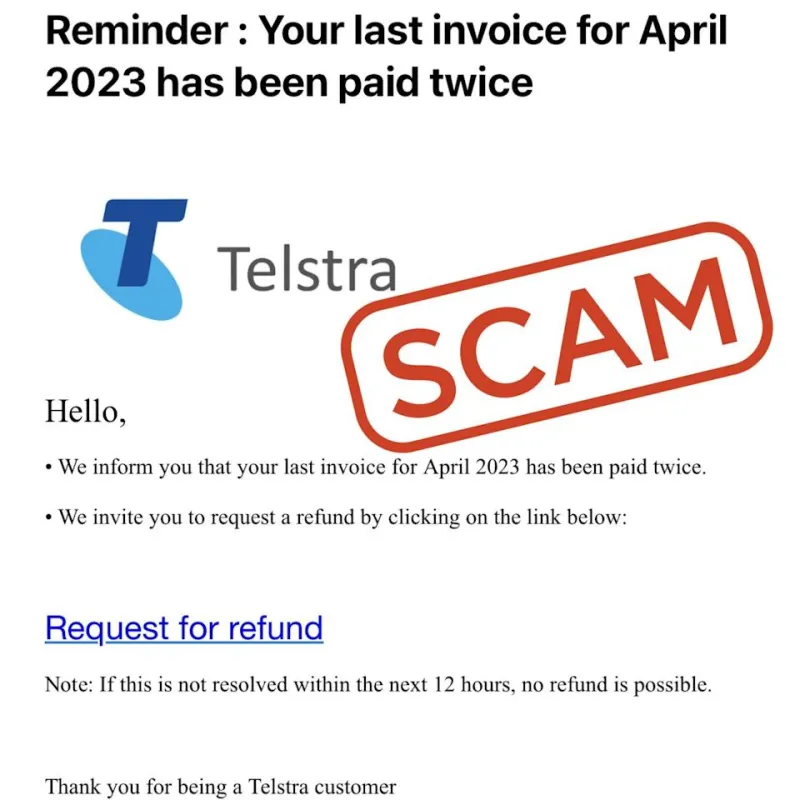
Photo: email scam refund notice on laptop screen, via s.yimg.com
Most phishing messages ask you to fix a problem. A payment failed. A password expired. A device was flagged. The refund scam inverts that formula entirely: instead of demanding something from you, it appears to give something back.
Across the United States, customers are reporting emails and text messages that look like routine billing correspondence — subject lines referencing account credits, overpayments, or service adjustments. The message explains that a recent review of your account revealed you were overbilled, and a refund of $75 to $200 is waiting to be deposited. All you need to do is confirm your details.
It is one of the most effective social engineering formats in circulation, and understanding why it works is the first step toward refusing it.
The Psychology of the Unexpected Windfall
Security researchers have long noted that urgency drives phishing clicks. But relief and pleasant surprise can be just as disarming. When a message promises money rather than demanding it, the emotional response is not anxiety — it is anticipation.
That anticipation changes behavior in measurable ways. A customer who would scrutinize a late-payment notice may click a refund link without hesitation, because the mental cost of ignoring it feels like losing free money. Fraudsters understand this asymmetry. The refund format exploits what behavioral economists call a positive affect bias: when we feel good, we verify less.
The sums involved are deliberately modest. A $1,400 refund strains belief; a $96.40 adjustment does not. Small, specific, plausible amounts read as genuine accounting errors rather than marketing fiction.
What Happens After the Click
The counterfeit refund portal follows a familiar architecture. The first screen mimics a standard sign-in page, capturing the username and password of anyone eager to claim their credit. The second screen asks for something new: the customer's direct-deposit information, framed as the fastest way to receive the refund.
At that point the attacker holds three assets: the account credentials, the banking details, and — critically — the appearance of a legitimate transaction that may prevent the victim from reporting the incident for days. Some victims never realize anything is wrong until their next statement arrives and no credit appears.
The most sophisticated versions of this scheme go further. After harvesting credentials, attackers log into the real account, change the contact email, and disable notification preferences — the same takeover sequence documented in prior coverage on this site. The refund that never arrives becomes the distraction that masks a full account compromise.
Real-World Patterns Worth Knowing
Consumer protection offices in several states, including Ohio and Washington, have issued advisories about refund-themed phishing tied to internet and cable providers. Common elements include:
- A reference number formatted like a genuine case ID
- A deadline — typically 48 to 72 hours — before the credit "expires"
- A sender domain that closely resembles the official one, often with an added word or hyphen
- A request to confirm banking information "for deposit purposes"
No legitimate billing adjustment requires a customer to re-enter payment details through a link. Refunds are processed against the payment method already on file.
The Verification Rule That Neutralizes the Scam
The defense is simple enough to write on a sticky note: any refund, credit, or adjustment claim should be verified inside the official application, never through the message itself.
Open the Xfinity app directly, navigate to the billing section, and look for the credit. If it exists, it will be reflected there. If it does not, the message that prompted you was fraudulent by definition. This single habit — closing the message and checking the source — defeats the refund scam and virtually every variant built on the same principle.
Additional practices worth adopting:
- Forward suspicious messages to the appropriate abuse reporting channels rather than replying
- Enable two-factor authentication so a harvested password alone cannot grant access
- Review linked payment methods periodically for unauthorized changes
A Credit You Cannot Verify Is a Credit You Do Not Have
The refund scam succeeds because it feels like good news, and good news rarely triggers suspicion. But in account security, unsolicited generosity deserves exactly the same scrutiny as an urgent threat. The money a fraudster promises is always your own — your credentials, your banking details, your service. Verify first, claim second, and let the counterfeit portal sit unclicked in your spam folder where it belongs.