When Your Xfinity Account Gets Compromised, Your Bank Account May Be Next: The Hidden Danger of Linked Auto-Pay

Photo: Pedro Ribeiro Simões from Lisboa, Portugal, CC BY 2.0, via Wikimedia Commons
For most Xfinity customers, automatic payment is a convenience they set up once and never think about again. A bank account or debit card is entered, a monthly billing date is confirmed, and the whole process becomes invisible — exactly as intended. That invisibility, however, is a double-edged arrangement. The same features that make auto-pay frictionless for legitimate customers also make it exceptionally useful for the criminals who manage to gain unauthorized access to those accounts.
This is not a hypothetical concern. Account takeover incidents involving major telecommunications and internet service providers have grown more frequent over the past several years, and the financial consequences for affected customers frequently extend far beyond the immediate service account. Understanding why linked payment methods amplify the damage of a breach — and how to reduce that amplification — is increasingly essential for anyone who manages household services online.
The Value of a Compromised Billing Account
It is worth understanding precisely what an attacker gains when they access an Xfinity account that has auto-pay configured.
At minimum, they can view the last four digits of the linked payment method and the billing address on file. In many cases, depending on account configuration and what information the user has saved, they may be able to view more complete payment details, modify the billing address, or redirect services. They can also use the account as a data source — cross-referencing the name, address, and partial financial information stored there against other stolen data sets to build a more complete profile of the target.
Beyond data exposure, attackers with account access can make service changes that generate fraudulent charges, upgrade service tiers to extract value before detection, or redirect equipment shipments to addresses they control. Each of these actions has direct financial consequences that arrive on the victim's next statement — often weeks after the initial intrusion.
The Detection Delay Problem
One of the most damaging aspects of auto-pay-related account fraud is not the initial breach itself but the time that typically elapses before the victim becomes aware of it.
Consider the standard auto-pay cycle. A customer's billing date arrives, the payment processes automatically, and no notification demands attention because everything appears normal. If an attacker has accessed the account and made modifications — adding service upgrades, changing the delivery address for new equipment, or extracting account data — those changes may not produce an obvious signal until the next billing statement arrives.
In practice, this means victims frequently have a detection window of three to four weeks during which the attacker's activity goes unnoticed. For someone who receives a paper statement or only checks their bank account periodically, that window can extend even further. During that time, the attacker may have already monetized the access and moved on, leaving behind a trail of unauthorized charges and modified account settings that takes considerable effort to unwind.
Research from the financial fraud sector consistently shows that the longer a breach goes undetected, the greater the total financial harm to the victim. Rapid detection is one of the few variables that customers can meaningfully influence.
How Attackers Move from Account Access to Financial Harm
The path from a compromised Xfinity account to broader financial damage typically follows one of several patterns.
Direct service fraud is the most straightforward. An attacker upgrades the account to the most expensive available service tier, orders new equipment to be shipped to an alternate address, or activates add-on services. The legitimate account holder is billed for all of it.
Payment method harvesting is more consequential. Even partial payment information — the card type, last four digits, billing zip code — can be combined with data from other breaches to reconstruct more complete financial credentials. Attackers who operate at scale collect this information systematically.
Account pivot attacks use the compromised service account as a stepping stone. If the email address associated with the Xfinity account is also used for online banking, investment platforms, or other financial services, a successful account takeover at Xfinity may provide the attacker with the information needed to initiate password resets on those higher-value targets.
Social engineering escalation occurs when an attacker uses verified account information — a confirmed billing address, the last four digits of a card, account number — to impersonate the victim in calls to customer service, either at Xfinity or at financial institutions. This technique, sometimes called vishing, can be used to make unauthorized account changes that would otherwise require identity verification.
Why Debit Cards Create Greater Exposure Than Credit Cards
The payment method type linked to an Xfinity account matters significantly in determining the scope of potential financial harm.
Credit cards carry consumer protections under the Fair Credit Billing Act that allow disputed charges to be reversed while an investigation is conducted. The cardholder is generally not liable for unauthorized charges, and the disputed amount is typically removed from the balance during the dispute process.
Debit cards, by contrast, draw directly from a checking account. While federal regulations do provide some protections under the Electronic Fund Transfer Act, the liability framework is less favorable to consumers — particularly when there is a delay in reporting. More importantly, money taken from a checking account via a debit transaction is gone immediately, which can affect the ability to cover other expenses while a dispute is processed.
Bank account ACH payments, which some customers use for auto-pay, present similar concerns. Unauthorized ACH transactions can be disputed, but the reversal process takes time, and the funds are absent from the account in the interim.
For customers who want to maintain the convenience of auto-pay while limiting financial exposure, a dedicated credit card — one used exclusively for subscription and utility billing — provides meaningful insulation between a service account breach and primary banking relationships.
Practical Steps to Isolate Your Financial Exposure
Reducing the financial blast radius of a potential Xfinity account breach does not require eliminating auto-pay or significantly altering your billing habits. It requires deliberate structural choices about how payment information is connected.
Use a credit card, not a debit card or bank account, for auto-pay. The consumer protections attached to credit card transactions are substantially stronger, and a disputed charge does not drain liquid funds from a checking account.
Consider a dedicated billing card. Some financial institutions and fintech services allow customers to create virtual card numbers or maintain low-limit cards designated for specific recurring charges. If that card number is compromised, canceling and replacing it does not disrupt your primary accounts.
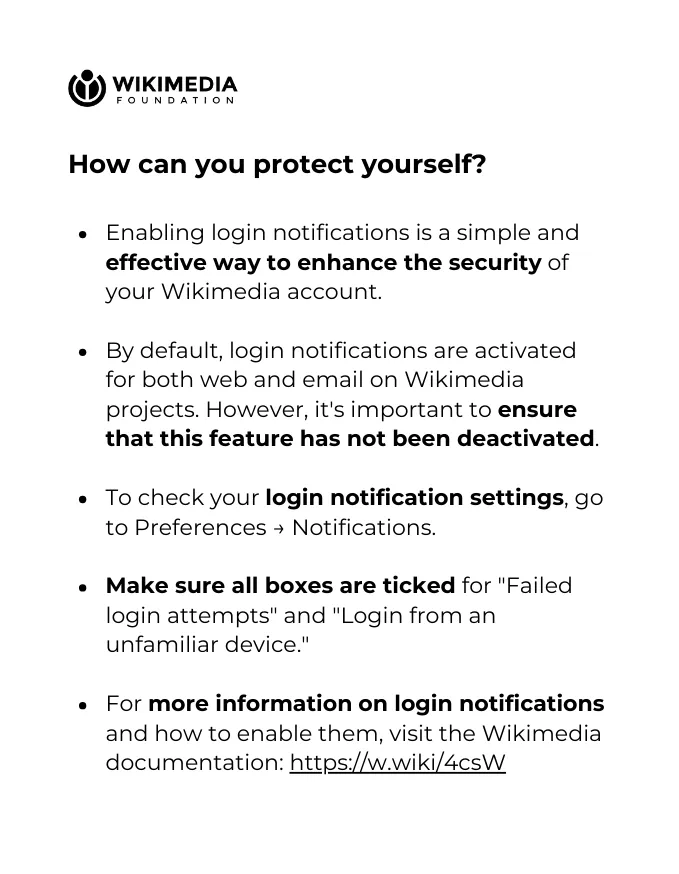
Set up account activity alerts. Xfinity account holders can configure notifications for changes to account settings, service upgrades, and billing events. Enabling these alerts reduces the detection window from weeks to hours.
Review your Xfinity account monthly, not just when something feels wrong. Log in at the start of each billing cycle, verify that service levels match what you selected, confirm the payment method on file has not been altered, and review the billing history for any charges that do not correspond to your plan.
Enable two-factor authentication on your Xfinity account. This single step prevents the majority of credential-based account takeover attempts, regardless of how the attacker obtained the username and password.
Audit the email address associated with your Xfinity account. If that email address is also used for banking or financial services, consider creating a separate email account for utility and subscription billing. Compartmentalization limits the damage of any single credential compromise.
The Bigger Picture
Auto-pay and linked payment methods are not inherently dangerous. They are, for most customers, a reasonable and efficient way to manage recurring bills. The risk they introduce is not in their existence but in the assumption of invisibility — the idea that because a system runs quietly, it can be left unmonitored.
An Xfinity account is not a high-security financial instrument, but it holds enough information and carries enough financial connectivity to cause real harm when it falls into the wrong hands. Treating it with the same periodic attention you give a credit card statement is not an overreaction. It is the baseline of reasonable account stewardship in an environment where credential theft is routine and the consequences of delayed detection are predictably severe.